
 简体中文
简体中文 English
 عربى
عربى
PE ACP Production Line: Complete Guide to Manufacturing Systems
Content
Understanding PE ACP Production Line Systems
A PE ACP (Polyethylene Aluminum Composite Panel) production line is an integrated manufacturing system that produces aluminum composite panels through a continuous process of coating, laminating, and finishing. These automated production lines combine aluminum coil processing, PE core material preparation, bonding, pressing, and cutting operations to create composite panels used extensively in building facades, signage, and interior decoration.
Modern PE ACP production lines achieve output capacities ranging from 1.5 million to 6 million square meters annually, depending on configuration and operational efficiency. The production process maintains strict quality control with panel thickness tolerances within ±0.05mm and coating uniformity exceeding 95%, ensuring consistent product quality for architectural and commercial applications.
Core Equipment Components
Aluminum Coil Coating System
The coating section represents the initial stage where aluminum coils receive protective and decorative layers. The system includes uncoiling machines that handle aluminum coils weighing up to 8 tons with widths from 1000mm to 2000mm. Tension control systems maintain consistent material feed at speeds reaching 10-80 meters per minute, preventing surface damage and ensuring uniform coating application.
Pre-treatment units clean and chemically treat aluminum surfaces through multiple stages including degreasing, chromate conversion coating, and drying. The coating application employs roller coating technology that applies PVDF, polyester, or epoxy coatings with wet film thickness ranging from 20 to 40 microns. Curing ovens maintain temperatures between 180-250°C with precise zone control to achieve optimal coating adhesion and durability.
Lamination and Bonding Equipment
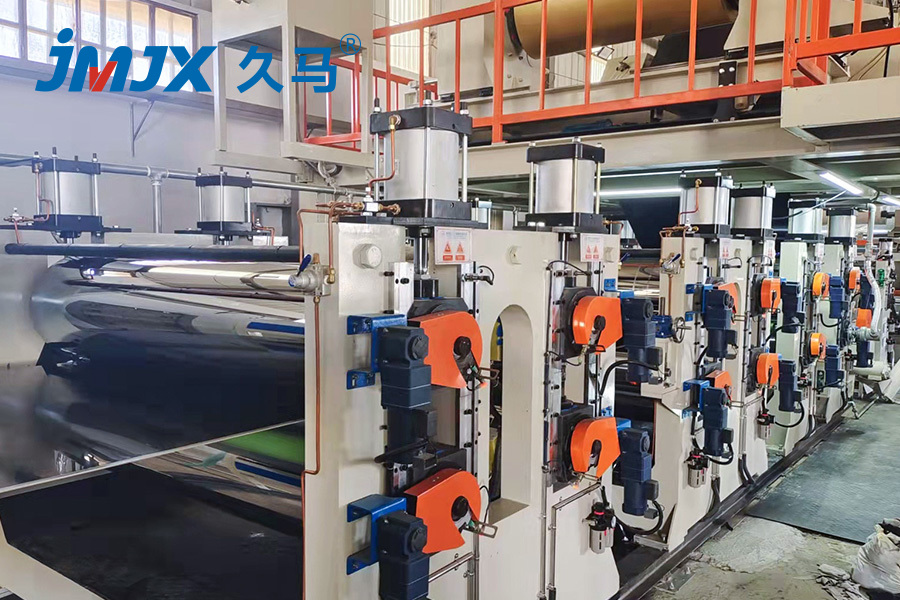
The lamination section bonds coated aluminum sheets with PE core material to create the composite structure. Modern production lines utilize hot-melt or chemical adhesive bonding systems, with hot-melt methods dominating due to superior efficiency and environmental advantages. The PE core material, typically low-density polyethylene (LDPE) or fire-retardant modified PE, comes in thicknesses from 2mm to 5mm with densities between 0.92-0.96 g/cm³.
| Equipment Component | Function | Key Specifications | Production Impact |
|---|---|---|---|
| Hot Press Machine | Bonds layers under heat and pressure | 180-220°C, 0.8-1.2 MPa | Determines bond strength |
| Cooling Roller System | Rapid cooling and stabilization | 15-25°C, 8-12 rollers | Prevents warping and delamination |
| Trimming Machine | Edge cutting and width adjustment | ±0.5mm precision | Ensures dimensional accuracy |
| CNC Cutting System | Panel cutting to specified dimensions | ±0.3mm accuracy, 60m/min | Maximizes material utilization |
Quality Control and Testing Systems
Integrated quality control systems monitor production parameters in real-time. Thickness gauges using laser or ultrasonic technology scan panels continuously, detecting variations and automatically adjusting press pressure to maintain thickness uniformity within ±0.03mm across the panel width. Surface inspection cameras identify coating defects, scratches, or contamination at line speeds, with defect detection rates exceeding 98%.
Bond strength testing equipment performs peel tests on sample panels at regular intervals, verifying that adhesion meets industry standards of minimum 7 N/cm for standard applications and 10 N/cm for high-performance applications. Automated testing systems record data for quality traceability and production optimization.
Production Process Workflow
Material Preparation Stage
Production begins with raw material preparation and quality verification. Aluminum coils undergo incoming inspection for thickness (typically 0.15mm to 0.50mm), surface quality, and mechanical properties. The aluminum alloy composition, usually 1100, 3003, or 5005 series with minimum 98% aluminum purity, determines panel performance characteristics including formability and corrosion resistance.
PE core material preparation involves extrusion or calendaring to achieve specified thickness and density uniformity. Fire-retardant PE cores incorporate mineral fillers and flame retardant additives to achieve Class A2 or B1 fire ratings per EN 13501-1 standards, essential for high-rise building applications. Material handling systems maintain proper storage conditions with temperature control at 15-25°C and humidity below 60% to prevent moisture absorption.
Continuous Lamination Process
The lamination sequence coordinates multiple operations in precise synchronization. Coated aluminum sheets and PE core material enter the hot press section where heated rollers activate adhesive bonding. Process parameters include:
- Bonding temperature maintained at 190-210°C for LDPE cores, adjusted based on core formulation and thickness
- Press pressure between 0.8-1.2 MPa applied uniformly across the panel width using hydraulic systems with pressure variation less than 3%
- Dwell time of 15-30 seconds under pressure, calculated based on panel thickness and line speed
- Line speed optimization balancing production rate with bond quality, typically 8-15 meters per minute for standard 4mm panels
Following bonding, panels pass through cooling sections with multiple chilled rollers reducing temperature to below 40°C within 20-30 seconds. Controlled cooling prevents thermal stress and ensures dimensional stability, critical for maintaining flatness tolerances under 0.5mm per meter of panel length.
Finishing and Packaging Operations
Finished composite panels undergo edge trimming to remove excess material and achieve precise width dimensions. Automated cutting systems utilize rotary or guillotine cutters with servo control, producing panels in standard sizes of 1220×2440mm, 1500×3000mm, or custom dimensions up to maximum widths of 1600mm and lengths of 6000mm. Cut-to-length accuracy within ±0.5mm ensures panels meet architectural specifications without field modifications.
Protective film application systems automatically laminate PE or PVC films to both panel faces, preventing surface damage during handling and installation. Stacking and packaging equipment organizes panels on wooden pallets with interlayer protection, maintaining stack stability during transportation. Standard packaging accommodates 100-200 panels per pallet depending on thickness, with total pallet weight not exceeding 2000kg for shipping efficiency.
Production Line Configuration Options
Capacity-Based Line Selection
Production lines are categorized by annual output capacity, determining equipment specifications and facility requirements. Entry-level lines producing 1.5-2.5 million square meters annually require approximately 3000-4000 square meters of factory space with three-phase power supply of 300-500 kVA. These configurations suit regional manufacturers or businesses entering the ACP market with moderate capital investment.
High-capacity lines achieving 4-6 million square meters annual output incorporate advanced automation including robotic material handling, AI-powered quality inspection, and integrated ERP systems. These installations require facility areas exceeding 6000 square meters with power infrastructure supporting 800-1200 kVA. Investment costs range from $2-5 million depending on automation level and auxiliary equipment.
Specialized Production Capabilities
Advanced production lines offer specialized capabilities for premium product segments. Wood grain and stone pattern coating lines integrate digital printing technology with coating systems, producing decorative panels that replicate natural materials. Print resolution reaches 1440 dpi with UV-curable inks, achieving photorealistic surface patterns that command 30-50% price premiums over solid color panels.
Anti-bacterial and self-cleaning coating lines apply nano-technology surface treatments during the coating stage. These functional coatings incorporate titanium dioxide or silver nanoparticles that provide photocatalytic decomposition of organic contaminants, particularly valuable for healthcare and food processing facility applications where hygiene is paramount.
Energy Efficiency Features
Modern PE ACP production lines incorporate energy recovery systems that reduce operational costs significantly. Thermal energy recovery from coating ovens and hot press sections pre-heats incoming materials or provides facility heating, achieving energy savings of 15-25% compared to conventional systems. Variable frequency drives (VFD) on motors optimize power consumption based on production load, with additional savings of 10-15% in electrical costs.
LED lighting systems and motion sensors in production areas reduce facility energy consumption, while intelligent production scheduling maximizes throughput during off-peak electricity rate periods. Comprehensive energy management systems monitor consumption in real-time, identifying optimization opportunities that can reduce total energy costs by 20-30% annually.
Operational Efficiency Optimization
Preventive Maintenance Strategies
Systematic maintenance programs maximize equipment uptime and product quality consistency. Critical components require scheduled maintenance including roller bearing lubrication every 500 operating hours, hydraulic system fluid changes every 2000 hours, and heating element inspection quarterly. Predictive maintenance technologies using vibration analysis and thermal imaging detect potential failures before they cause production disruptions, reducing unplanned downtime by up to 60% according to industry benchmarks.
Roller surface conditioning maintains uniform pressure distribution and prevents panel surface defects. Chrome-plated press rollers require re-grinding every 12-18 months to restore surface smoothness, with diameter tolerances maintained within 0.02mm across the roller length. Proper roller maintenance directly impacts product quality, with well-maintained systems achieving defect rates below 2% compared to 5-8% in poorly maintained lines.
Production Scheduling and Material Flow
Efficient production planning minimizes changeover times and maximizes material utilization. Color-based production sequencing reduces coating system cleaning requirements, with similar colors grouped in production runs. Changeover between colors of the same base type requires 15-30 minutes, while changing coating types demands 2-4 hours for complete system flushing and recalibration.
Just-in-time material delivery systems coordinate raw material arrivals with production schedules, reducing inventory carrying costs while ensuring material availability. Automated warehouse management systems track aluminum coil inventories by alloy, thickness, and coating requirements, optimizing material selection and minimizing waste from material expiration or obsolescence.
Quality Management Systems
Comprehensive quality systems implement statistical process control (SPC) monitoring critical parameters continuously. Control charts track coating thickness, panel flatness, bond strength, and color consistency, triggering alerts when trends indicate potential quality deviations. Implementation of Six Sigma methodologies reduces defect rates to below 3.4 defects per million opportunities, achieving quality levels required for premium architectural applications.
ISO 9001 quality management system certification provides structured frameworks for continuous improvement. Regular internal audits identify process inefficiencies and quality risks, with corrective action systems addressing root causes rather than symptoms. Certified operations achieve customer satisfaction rates exceeding 95% through consistent product quality and reliable delivery performance.
Environmental and Safety Considerations
Emissions Control Systems
Coating operations generate volatile organic compound (VOC) emissions requiring treatment before atmospheric release. Modern production lines incorporate regenerative thermal oxidizers (RTO) or activated carbon adsorption systems that achieve VOC removal efficiencies exceeding 95%, maintaining emissions below 50 mg/m³. Solvent recovery systems capture and purify coating solvents for reuse, reducing raw material costs while minimizing environmental impact.
Dust collection systems capture particulate matter from trimming and cutting operations, preventing workplace contamination and environmental releases. High-efficiency particulate air (HEPA) filtration removes particles as small as 0.3 microns with efficiency ratings of 99.97%, protecting worker health and meeting air quality regulations in industrial zones.
Workplace Safety Protocols
Production line safety systems protect operators from mechanical and thermal hazards. Emergency stop systems positioned at 15-meter intervals enable immediate equipment shutdown, with response times under 2 seconds. Light curtains and safety interlocks prevent access to moving machinery during operation, while thermal guards protect personnel from contact with surfaces exceeding 60°C.
Fire suppression systems address combustibility risks associated with PE materials and organic solvents. Automatic sprinkler systems provide facility-wide protection, while specialized suppression systems using FM-200 or CO₂ protect electrical equipment areas with discharge times under 10 seconds. Regular fire drills and emergency response training ensure personnel preparedness, with target evacuation times under 3 minutes for all facility areas.
Waste Management and Recycling
Scrap reduction programs minimize waste generation through optimized cutting patterns and material handling procedures. Edge trimmings and defective panels undergo separation into aluminum and PE components for recycling. Aluminum scrap maintains recycling value of 90-95% of virgin material cost, providing significant revenue recovery while supporting circular economy principles. PE material recycling into lower-grade applications or energy recovery achieves zero-landfill goals increasingly demanded by environmental regulations.
Investment and Economic Considerations
Capital Investment Analysis
PE ACP production line investments require comprehensive financial planning considering equipment costs, facility development, and working capital. A mid-capacity line producing 3 million square meters annually typically requires total capital investment of $2.5-3.5 million including equipment ($1.8-2.5M), facility preparation ($400-600K), and initial working capital ($300-400K). Equipment from European manufacturers commands premium pricing but offers superior reliability and product quality capabilities.
Return on investment calculations consider market dynamics, production costs, and competitive positioning. With average panel selling prices of $8-15 per square meter and production costs of $5-9 per square meter, gross margins range from 25-45%. Efficient operations achieve payback periods of 3-5 years under normal market conditions, with potential for accelerated returns in high-demand markets or premium product segments.
Operating Cost Structure
Ongoing operational costs determine long-term profitability and competitive positioning. Major cost components include raw materials (65-75% of total costs), energy consumption (8-12%), labor (6-10%), and maintenance (3-5%). Material costs fluctuate with aluminum market prices, requiring hedging strategies or long-term supply agreements to manage price volatility. Energy efficiency improvements yield direct cost reductions with rapid payback, making efficiency investments highly attractive.
Labor productivity optimization through automation reduces per-unit costs while improving quality consistency. Advanced lines operate with staffing levels of 8-12 personnel per shift producing 10,000-15,000 square meters daily, achieving labor costs below $0.60 per square meter. Continuous improvement programs focusing on waste reduction and process optimization deliver ongoing cost advantages in competitive markets.
News
-
1. Introduction to Laminating Production Line The laminating production line is not simply a machine—it is a strategic s...
READ MORE -
1. Introduction: The Building Block of Modern Architecture Look around any modern cityscape. The shimmering facades of s...
READ MORE -
Introduction to PE Aluminum Composite Panel (ACP) Production 1.1. Brief Overview of PE ACP and Its Applications Polyethy...
READ MORE
 Phone: +86-180 1500 4677
 Tel: +86-519 8899 7278
 Email:
Factory Address 1: No. 19, Guangyi Road, East Development Zone, Guangde City, Anhui Province, China
Factory Address 2: No. 205, Changwu South Road, Wujin District, Changzhou City, Jiangsu Province, China
Copyright © Guangde JiuMa Machinery Co., Ltd.
